VISION
I was just thinking back to when I was 18. I got a job working at Eye Masters in the summer of 1999.
I worked in the lab as a lab tech cutting the lenses for the glasses of the patients, of the optometrist, that
had an office next door in the strip mall. Everyone I worked with was a character.
There was the optometrist, Dr. Obrien. Millionaire pervert. You ever have an eye doctor ask you to
smell his finger?
I don’t even know what I thought of that, it was interesting at the time. Characters……. I don’t think
people like this still exist. Maybe somewhere out there, on The Gulf Coast.
Everybody was trying out their routine on me. I’m the new guy. Conrad was in charge of training me.
“Shag, how old do you think I am? Guess my age.”
“I don’t know, 25?”
“I’m 36 man.” He smiles and nods his head. “Yeah, you believe that?”
I take a closer look. “Damn, that’s impressive,” I say.
I bet that motherfucker looks pretty much the same now.
“Shag, you ever had sex with a woman who’s had a kid?” Conrad pauses and looks from left to right,
peering at me with his serious eyes. “My ex-wife, so much better after my son was born. Ha gum man.
You see, after a woman has a baby her inside changes. You gotta hit that from the back, hard.” He claps
his hands together. “You gotta hit that back wall. Human beings have got to stop trying to extricate
themselves from the violence of the universe. Hard.”
Back wall? I nod in agreement. “What are you doing after work today?”
“Nothing man, you should come over. You give me a ride home?” Conrad looks over at his bike.
I smile. “Yeah, we’ll throw your bike in the back of my truck.”
“Alright, maybe JR will wanna hang out.” Conrad walks off to surface a lens.
I walk to the front of the lab and sit down next to JR. He’s cleaning a pair of glasses he just finished.
He points out at the sales floor and starts to talk shit. “You see dude up there?” That’s what he calls what’s
her name sometimes. (At this point, I don’t have a problem with anyone who works here. I just started a
few months ago and I’m 18. The futility of existence hasn’t started to drain my will to get along and
behave myself within polite society yet.) I nod my head. JR continues, “Ted (real name Tess) over there
came in here yesterday and informed us all that the only sure fire way to keep a man, and satisfy his
desires, and stop his eye from wandering-” JR shudders a bit and hangs his head. “Is to suck him off every
morning before breakfast. Worked with her husband apparently.”
Suraj pokes his head in between us. “That’s dirty pool man. Nasty-ass, fucking nasty.”
I look up at Suraj, he’s cutting a lens while obsessively smelling his upper lip. He cracks me up. I say
to him. “Oh yeah?! Check this out. I was out on the sales floor the other day and Tess started going off on
how fine of a man you are Suraj. I’m just saying. She wants you dude.”
“That’s nasty-ass, disgusting. Never.” Suraj looks to the side and starts gagging towards the floor.
JR looks up from his job. “You know dude’s husband comitted suicide.”
“Not surprised,” Suraj comments.
Harold enters the lab. “Aa~ahh uh ah~hha!!! Owwww ye~ah! Rock ‘n’ Roll! What’s up my dudes?”
Harold is shredding air guitar. I think he worked as an usher at one too many hair metal concerts in the
1980s. He’s a kook. He’s dancing around the lab like a junky on smack. He starts to sing to us, “what’s
up? What ya’ll talking about?”
JR looks down and sighs, “Ted.”
Harold is taken aback. “Ugh, what are ya’ll talking about her for?” Harold cocks his head back and
starts giving it to us. “You know she was talkin’ shit about you and Shag here the other day. Said you two
were her fucking slaves last weekend.” Harold starts to sing, “her bit~ches. Said she got her money’s
worth and then some. Ha!” Harold laughs in our faces.
JR waves him off. “Whatever dude. She paid us forty bucks each to help her move.” (1999 money)
“Only took an hour or two,” I say. “Wasn’t that big of a deal.”
“Well you wouldn’t have caught me dead working for that one,” Harold says. “Scar-ree.”
JR hands Harold a tray with a pair of glasses in it. “There you go, there’s your drill mount. Get the
fuck out.”
Harold smiles and says, “fuck you.”
I get back to work. I’m doing a polish on a rimless job, so I sit down next to Kenny at the wheel. He’s
polishing his fingernails instead of the lenses he’s supposed to be polishing. “Shag, you know how a
woman can tell….. if a man is going to…..” Kenny starts waving his arms around. “Make her cum or
not?” Kenny looks at his hand and then looks at me answering his own question, “manicured finger
nails.”
“I didn’t know that,” I say.
“Come on man. Hygene.” Now he’s showing off all ten nails.
I kinda shrug. “I take a shower everyday. I’m thorough. I cut my finger nails.”
Kenny turns his head inquisitively and asks, “do you file them at the end? No huh? Alright then man,
you gotta give yourself a manicure sometime.” Kenny points his nose down and looks at me over his
eyeglasses. “Hey, you know I feel really weird about last Saturday night on the boat.”
Jesus Christ, here we go. I’m entering a flashback to last weekend. We’re all on Dr Obrien’s boat out
in Galveston Bay. Everybody is getting fucked up. Donna and Crystal start to make out. Then they start to
feel each other up. Then they start to rub each other’s pussies, in front of pretty much everyone me and
Kenny work with. “Hey, it’s no big deal,” I say. “They’re both chicks, I don’t care. Donna gets down with
other girls all the time. Doesn’t bother me, long as it’s not a guy.”
Kenny looks at me alarmed. “Well dooood, uh uh, it’s fucked up. I don’t want Crystal fucking
anybody but me regardless.” Kenny has a kind of whiny voice, blond hair, pale skin, white as a ghost.
Was born in Canada, lived there until he was two, then his parents moved to The U.S. Now he lives with
his dad and his mail order bride (or whatever she is) in the suburbs south of Houston just like the rest of
us. He drives a low-level sports car; a convertible. He’s 30. His lady is my age. He likes to complain about
Bill Clinton handing the Panama Canal back to the Panamanian government, and according to him, since
America doesn’t have a king, the assassanations will continue on into eternity unlike The Great British
Empire where heads of state are never assassinated. “People are afraid of killing kings,” he claims. “But
not presidents.”
And, he’s proud to be a Canadian……….. He’s lived in the states for 29 years.
I try to sympathize, but I just can’t. “Well, I don’t care,” I say. “Maybe I’m fucked up. Not like I could
do anything about it anyway. Donna’s crazy. She’d just start making fun of me if I tried to step in.”
Kenny’s still staring at me with his squirly eyes. Eyebrows raised. Head rolling around like a goddamn
bobble, fucking weirdo.
Mena from the sales floor slips into the lab. “Stanley, jou like my dress?” In her sexy Mexican accent.
“I just got it.”
“Sure. It’s nice.”
“How does my ass look in it? Does my ass look good today?” I’m not sure how to answer. Actually I
am sure how to answer, but I don’t.
Around 6pm me and Conrad duck out back to have a smoke. “Alright man. Today Shag, I gotta teach
you how to clean out the slurry in the surface machines.” Conrad has kind of this articulate lazy drawl;
real smooth talker. He has a pleasant cadence, always half stoned. Conrad mumbles on. “We dump it
down the drain back here. See that?” Conrad points down to a grate in the cement. All around the drain,
on the concrete, is a white layer of lens dust that has, over the decades, bleached the concrete chalk white.
“Pour the lens waste down the hole, then hose it down.” Conrad lets out a little chuckle and drawls, “gotta
keep it clean back here in case OSHA shows up.”
OSHA. I hope not. There’s lens shit all over that drain. We’re not fooling anybody. I just kinda shrug.
“Alright.”
Conrad tosses his cigarette at the grate. We dump two buckets of white slurry full of micro plastics
down the drain, (all bound for Galveston Bay) and we’re off. “Let’s get something to drink,” Conrad says.
Sounds like a plan. We clock out. Within 30 minutes we’re pulling up to Conrad’s apartment complex.
Me with a six pack of Shlitz, Conrad with a couple tall boys of Steel Reserve. I never met anyone that
drank 211 before. Conrad was a black dude with blue eyes. He’d point that out to everybody he met. His
father was white and his mother was black, both from Africa, can’t remember what part. Conrad was from
Dickenson which is where I was living at this point. Now he lives in Nassau Bay in the apartment next
door to JR. That’s how they know each other. We go up to his apartment and start drinking.
Eventually JR shows up with a bong and an acoustic guitar, “Shag, play something!” I start playing
some Guns ‘n’ Roses riffs. Conrad plays the bongos on a coffee can as JR plays the spoons. I’m playing
“Patience” or something.
Conrad’s apartment is a studio, one room. There’s a fridge in the back with nothing in it, next to an
oven and a stove with nothing on it. A bed in the corner next to a lamp, next to a bathroom, and in the
middle of the place, there’s a TV in front of a couch and a lazy boy, and somehow there’s a small dining
table with four chairs around it as well. It’s smokey and dim. A red haze. He’s got drapes over the
windows to set the mood. I’m sittin’ on the couch, puffing on a Camel while doing my Axel Rose
impersonation, not a care in the world.
There’s a knock at the door. It’s Donna, she lives a few streets over; a few streets down. “Hey guys,”
Donna kind of half waves as Conrad lets her in. They hug. “So what’s going on?” She’s kind of teasing us.
“You guys are playing some music huh?” She pumps her fist. “Rock ‘n’ roll!”
I smile and hand her a beer. “You just get out of school little girl?”
“Uh, school gets out at 2:30,” she says with her valley girl accent. She sits down next to me and cracks
her Shlitz. “I’ve been doing stuff, jogging, getting into shape. I was listening to your Bob Marley tape. Oh
my god you guys, reggae is really good for jogging.” Donna starts moving her arms in kind of a bent
circular motion. “It’s like a train,” she says. “Choo choo chi chi, choo choo, chi chi~” then she starts
grinding her ass into the couch, “~choo choo chi chi, choo choo, chi chi~chi chi~chi choo choo chi~chi.”
Donna puts her hand to her mouth and looks down with a little giggle.
“Totally!” I agree.
Conrad starts doing a little dance, slowly lifting up outa the lazy boy. “You know any reggae Shag?”
“No.” I say.
JR takes off his shades and looks at me like I’m retarded. “Oh man, you don’t know any raggae? Well,
play some country music or something.” Then there’s a knock at the door.
“Sheila?” Conrad yells out.
Donna’s fucking with Conrad. “Who’s Sheila Con-rad? Some hot piece of ass you’re tapping?”
Conrad points at the door, and whispers, “hey–hey, woh. She’s coming over soon. Watch your mouth
Donna.”
“Oooh. What are you gonna do Conrad?” Donna whispers. “Hit me?” Then Donna lets out a little yelp
and covers her mouth.
A voice shouts meakly through the paper thin front door. “No it’s me. It’s Hector.”
Conrad looks over at me and says, “Why is Hector at my door?”
“I don’t know,” I say. “He probably saw my truck. Figured we were hanging out. He’s been over here
before.”
“Alright, it’s cool.” Conrad gets up and opens the door on the wall behind his chair. “How you doing
Hector?”
Hector looks drunk already. He’s wearing his leather jacket in the summer. “Hey, hey, everybody.”
He’s just giggling kind of. “What the fuck is up?” With that, Hector kinda falls over into the couch
between Donna and JR. His sunglasses slide down over his eyes from his head.
With a mischevious smile, JR sits up a bit and answers. “Nothing…… Haven’t seen you uh…..
Haven’t seen you in a while dude.”
“Oh yeah, I’ve been working nights at Pappa’s Seafood as a waiter. It’s a pretty cool job,” Hector
slurs. “Waiting tables is alright.”
JR puts his hand to his chin. “That’s cool,” he says…… “Oh I know! I haven’t you since the party on
the boat.” (JR is hilarious, fucking 29 year old hesher slash redneck working in the strip mall; got his
bandana folded in half over his hair like he’s Axl fucking Rose or something.) “Dude!” JR winks at
Donna. “You know where Donna and Crystal started making out and then-”
Donna squeels “Fuck—you–J-R!” She’s holding her hand over her mouth again, giggling.
Hector, kind of awkwardly chuckling, sits up in his seat. “It was a good party, I had fun.”
Conrad’s being a gentleman and tries to change the subject. “So you’re off from the resturaunt
tonight?” He inquires. “I used to wait tables too man, ha gum man. Good money sometimes, but you take
a bunch of shit. Everybody knows you get paid get paid $2.13 an hour, yet some people still don’t tip. It’s
fucked up man.” Conrad takes a breath. “You been doing it a month huh?”
Hector’s looking up at the ceiling now. “Yeah, I was working six days a week. Doing pretty
good……… not anymore.”
“What?” Conrad asks.
Hector starts laughing. “I got fired last night.”
I start cracking up. “That’s amazing! One month, one fucking month, Jesus!” I’m holding my head in
my hands. “How do you keep getting employment?”
Hector’s trying to fight back, but he’s so full of shit. “Hey, I have some good references,” he says.
He’s looking at the ceiling again now. “When I worked at USA for a year with Bill and the library at UT
that one semester.”
I’m not buying it. “The one semester you kind of went to college?” I say. “There’s gotta be so many
holes in your resume dude. How many jobs did you have last year anyway?”
“I don’t know, I lost track.” Hector’s searching for his argument. “Look no-one cares! Nine times out
of ten nobody checks any of the shit that I put on my resume. They don’t want to look into my past,”
Hector says. “They want me to be something, so I figure out what that is they want, and I play the part.”
I smile and shrug. “What, they want a half Indian man that kind of went to college to kiss their ass and
take their seafood orders?”
“Yeah,” Hector says.
JR butts in, “So what did you get fired for?”
Hector puts his tounge behind his closed teeth. “Well it was kind of an accounting discrepancy…..
kind of a difference of opinions.” He looks up and smiles. “You guys wanna get some more beer?”
Conrad moves his head from left to right. “Yes.”
JR ignores them. “So what does that mean, an accounting discrepancy?”
Hector is looking down at the carpet now. “I added some digits, and uh, changed some numbers on
some tips here and there.”
“And you got caught,” laughs JR. “Hey you know we’re hiring in the lab Hector.” JR opens up his
palms.
Hector looks momentarily thrilled. “Really?”
JR laughs in his face. “Fuck no, I’m not hiring you, you were comiting credit card fraud. Are you
insane?”
“Give me a break, a dollar here, five, ten bucks there; I’m just balancing the scales.” Hector points at
me and Conrad. “You check either of these fuckers references before you hired them?” Shaking his fist.
“You know your little buddy Shag there was fired from Walgreens twice back in high school!” Hector
starts doing a Southern California accent. “Fucking stoner couldn’t remember to write down his work
schedule.”
JR sighs, puts out his mitts, and moans. “Give me the money. Especially you thief.” JR flicks Hector
on the arm while looking at the rest of us. “Throw in fuckers! I’ll walk down to the gas station.”
Donna feels around in the pockets of her jeans and pulls out a wadded bill. “Uhm, I’ve got a dollar. In
three months, when I turn 18, I’ll buy all you guys beer. I’m getting a settlement for this car wreck I was
in when I was 15.” Donna starts to do her sympathy / sobby face. “I broke my pelvis, you guys. I had to
have a catheter. It really hurt.” I love Donna, she is hilarious. I hand JR a fiver.
“Everybody okay with Miller Lite?” We all nod our heads like we give a fuck. Then JR starts talking
shit to me, “I can’t believe you drink this fucking Shlitz crap Shag,” as he throws his empty can into the
trash. “Ugh, just spend the extra dollar.”
“Well, why don’t you give me a raise then motherfucker?”
“I know you. You’d still drink this fucking crap. Plus, you haven’t even been in the lab for six
months.” JR starts looking at me through his glasses. “Learn how to cut a drill mount (a style of glasses)
and we’ll talk.” I ask JR. “So, did you check any of my refences when you hired me?”
JR laughs. “Maybe Hector’s got a point.” There’s another knock at the door.
This time it is Sheila. Sheila looks a little trashy. Her blonde hair’s all scraggely. She’s wearing daisy
dukes and a ripped up tank top, and she’s smoking a Kroger brand cigarrette. How do I know this?
Beacause I bummed one from her, just to see how fucking disgusting it would be.
I look over at Conrad. “Life is perfect.”
He came out of the white heat of Houston, a man etched in the stark geography of the Texas scrub, and he carried the dust of it all the way to the salt-slicked air of Oakland. His name was Greg Ashley. He was a maker of songs and a carver of sound, a technician of the electrical ghost. For twenty years he moved through the world like a wolf across a frozen tundra, solitary and lean, leaving a trail of black-wax records in his wake.
In the year 2003, a man named David Katznelson of Birdman Records laid hands on a burned CD—a silver disc of raw, solo static—and the pact was sealed. Thus rose The Gris Gris. They were a four-headed beast: Ashley on the wire-strung guitar and vocals, Joe Haener hammering the skins, Oscar Michel on the low-thrumming bass, and Lars Kullberg tickling the ivories. They played a music of the spheres if those spheres were cracked and leaking oil. It was a black magic psych cult, a primitive stomp that blended the old hallucinatory echoes with a garage-punk violence that would make a sane man seek the nearest exit.
They cut their self-titled debut in 2004, birthing the single “Mary No. 38,” a track that rattled the teeth. By 2005 they had wrought For the Season, and they rode that dark horse until the end came in 2009 with a record called Live at the Creamery. Then the band dissolved into the ether, leaving only the smell of ozone and spent tubes.
But Ashley was a man possessed by a restless, shivering muse. He had come from The Mirrors and the Strate Coats, and he was not about to go quiet. He retreated to his fortress, a recording studio dubbed The Creamery. There he birthed a long line of solo works—Medicine Fuck Dream in 2003, Painted Garden in 2007, and the Requiem Mass of 2010. He chronicled the rot and the beauty in Another Generation of Slaves and Pictures of Saint Paul Street. By the time Fiction is Non-Fiction and Radio MDMA arrived, he was a veteran of the psychological wars, culminating in the 2025 arrival of Neon Exotica. He even reached back into the graveyard of pop to exhume Leonard Cohen’s Death of a Ladies’ Man, re-recording the whole damn thing as a testament to the heavy-hearted.
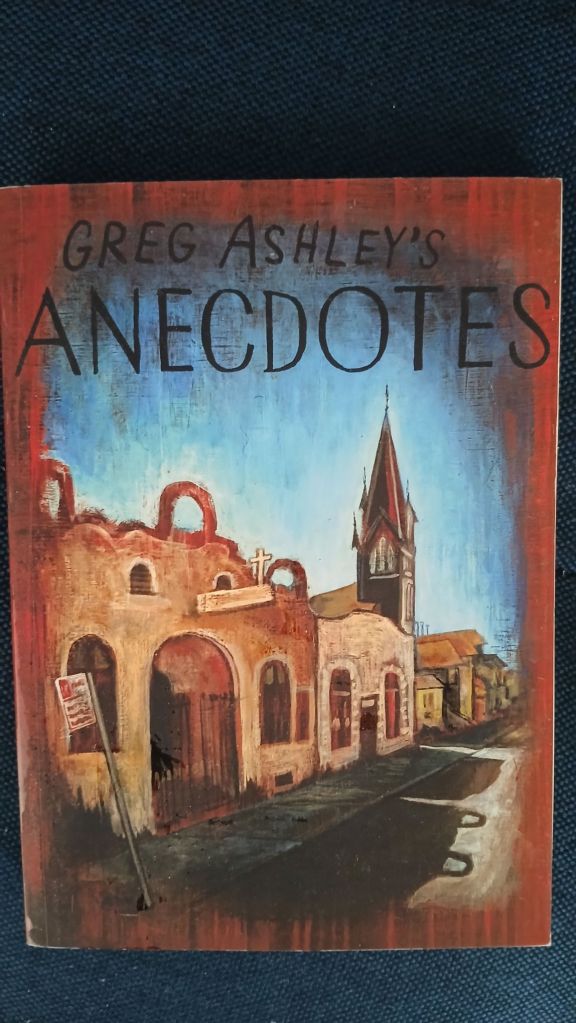
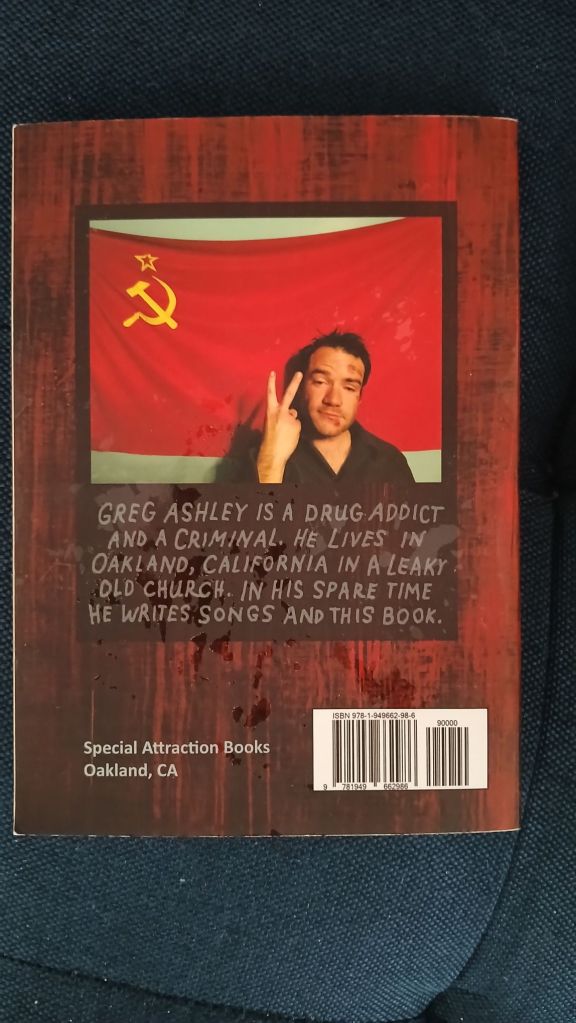
He wrote a book too. Called it Anecdotes. It was published around 2019, and it wasn’t some flowery rock-star rag. It was a cold, hard stare into the sun. A proper anti-drug book. He told of the Texas dirt and the Oakland psych-rot, of the crack-pipes and the blackouts and the shivering, sweating hell of the detox. It was a sobering reminder to any young buck with a guitar that the “interesting” life of a twenty-one-year-old is just a sad, dull funeral by the time you hit thirty-five.
He looked at the world and saw a “bullshit society,” a rigged game where the winners toss down consolation prizes like scraps to a mangy dog. He lived on San Pablo Avenue—the “Saint Paul Street” of his songs—a place of pure, unadulterated debauchery. He’d tell you that a man’s soul fares better in the “sticks,” even if the money is thin as a winter coat in a blizzard.
He was a crotchety ghost in the machine. He held onto his Hotmail account like a man clutching a life raft in a digital storm and treated the smartphone like a demonic artifact he couldn’t quite master. He didn’t care if the fans liked his shifts in tone or his jagged turns. He played for the truth of the note, not the applause of the crowd. He stood on the deck of a sinking civilization, indifferent to the water at his knees, still twisting the knobs on a tape deck to find that one perfect, agonizing frequency.
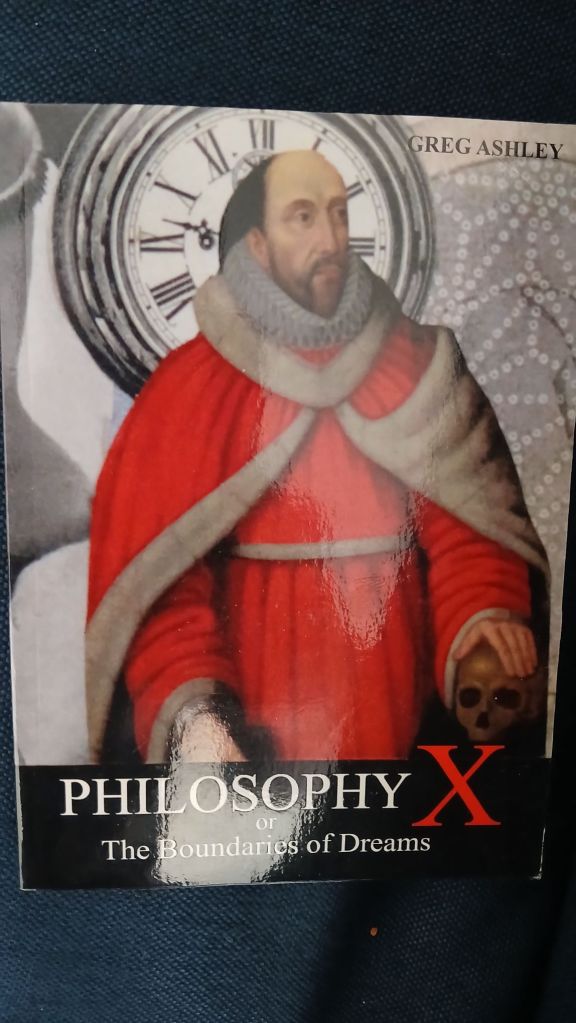
to buy one or two of Gregs Brilliant books hit him up on face book or insta gram @the_creamery_studio
-Ellis Jones

